Showing posts with label film technology.. Show all posts

Monday, 4 August 2014

Myths about brain


The brain is amazing and complex - but our lack of understanding has led to a great variety
of myths throughout the years. Like "bigger is better". While this may be true for some other organs - you only need to look at a sperm whales brain, which is nearly 6 times larger than a human's, to seethes myth fall apart. Yes, they're certainly intelligent animals, but their cognitive skills pale in comparison to our own. Had a fun night out? Don't worry, alcohol doesn't actually kill your brain cells. Although it does cause damage and creates problems conveying messages between neurons, the damage is mostly reversible. Similarly, drugs don't actually create holes in your brain. Though some can permanently change your brains functionality and structure, the only thing that can put a hole in your brain is physical trauma.
Good thing you have 100 billion brain cells - or not. Surprisingly, it wasn't until 2009that scientists discovered the true number to be closer to 86 billion. Sure it may seem like a small difference, but those 14 billion neurons are equal to the size of an entire baboon brain. To further put those numbers in perspective, consider that 1 million seconds is 12 days, while 1 billion seconds is 31 years. So that 14 billion neuron difference may not be so small after all.
Regardless, we can't use them all, right? Most movies and sci-fi books have us believe that humans can only use around 10% of our brain... which is absolute nonsense. Thanks to modern brain scanning technology, we know that we use the whole thing - all the time! Not necessarily all at once - when you're walking, for instance, the parts of the brain associated with movement are more active than other areas. However, there is no part of the brain that simply doesn't do anything. It represents 3% of the bodies weight and uses 20% of its energy. That's a busy brain! But we generally use one side more than the other, right? Nope! While you may have been convinced that if you're more logical or analytical, you're more 'left brained' and if you're more creative or intuitive you're 'right brained' it's simply not true. While different sides of the brain are indeed used for specific functions - for example, language uses the left hemisphere while the right hemisphere helps to read emotion - studies on thousands of individuals have found no evidence of a left or right dominance in individuals. Another words, you use both sides equally. And you don't actually have 5 senses like you were always told - in fact, you have a lot more! Like nociception which is the sense of pain, or proprioception, the sense of how our bodies are positioned. Not to mention sense of balance, temperature and passing of time. Scientists at GE's Global Research Centres are collaborating with top researchers and institutions to uncover new insights about the brain's functionality. If you're interested in debunking more myths or understanding more about the brain, you can follow their progress at GE Reports, as they work together to crack the brain's greatest mysteries.

Sunday, 3 August 2014

Do plant think ?????


With over 300,000 plants species on Earth, there's no doubt that they have highly developed
senses to stay alive and thrive. But while some of their features may be compared to taste, sight, touch and smell in humans, have you ever wondered - can plants think?On land, the cumulative mass of plants is 1000 times higher than that of animals. But these plants are immobile and can't move around in their environment; which is, seemingly, a pretty big evolutionary disadvantage. This has forced plants to adapt in amazing ways that often go unnoticed by the naked eye. Smell something funny? Plants do too - and they react to these chemicals in the air. For example, when fruits start to ripen, they release a chemical called ethylene. And when neighbouring fruits sense this pheromone, they ripen faster, so that all fruits mature at the same time. Plants also give off scents which attract insects to spread their pollen. In particular, the amazing carrion flowers grow tiny hairs, feel warm and smell like
rotting flesh in an attempt to mimic a dead corpse. This is to attract flies and beetles as pollinators. On the other hand, when a plant is attacked by an insect, animal or pathogen, it knows. When acacia trees are grazed by animals, they quickly react by producing chemicals called tannins, which make their leaves unappetizing and tough to digest. Some even produce enough toxin to kill the animal. Perhaps more impressive are some corn and cotton plants, which when eaten by caterpillars, release chemicals in the air that attract parasitic wasps, who
fly in and ultimately kill the insects. On some level, they communicate with the wasps. Crazy as it seems, even sound recordings of caterpillars chewing leaves, trigger this response. Without any form of touch, the plants react, as if they can hear. On a large scale, plants also work together. A web of underground fungi can connect tree roots in forests, allowing them to exchange nutrients and information. Using radioactive isotopes, scientists discovered that trees share water and nutrients with others in need. Large trees nourish smaller shaded ones until they are tall enough to reach sunlight, and trees that stay green all year round share nutrients with trees that lose their leaves in winter - helping them through the season. Which is then repaid in the summer months, like a transactional exchange. Some scientist refer to this as the 'wood-wide web’. Perhaps the most shocking fact, is that some plants seem to have memory. Mimosa pudica plants, are those leafy plants that close up when touched. This reflex is meant to scare away insects that land on them. In an experiment on these reflexes, scientists notice that when dropped from 15cm they would close when they hit the group. Not so surprising. But after repeating the drop 4 or 5 times, some of the plants stopped closing, as though they had realized the stimulus wasn't harmful. If they were shaken instead, they would close, but any time they were dropped from this same height, they stayed open. This effect lasted for weeks - the plants had memories. Of course, plants don't have brains or other cells and organs that we deem necessary for intelligence. Brains and neurons are irreplaceable, but plants are immobile and often attacked, so they must be able to survive after part of them is eaten, or destroyed. A brain just wouldn’t work. But if you measure intelligence or thought as the ability to solve problems, interact with an environment, and even work in groups, then plants are incredibly smart. It’s something to think about next time you're munching down on a piece of broccoli!

LIKE US ON FACEBOOK

Should we eat insect???


Many people find the very thought of insects disgusting - especially when they're in your mouth. But have you ever considered that insects could be more nutritious, environmentally friendly, and abundant than most other foods? Should we all be eating insects? Compare 100 g of crickets, to 100 g of chicken, beef or pork, and you'll find they have comparable protein content, but crickets are much higher in essential vitamins and minerals such as calcium, zinc and iron. Similarly, insects like meal worms are low in fat, and contain large amounts of fibre. But, that's not the only reason to incorporate them into your diet. Currently there are 1.53 billion hectares of cropland and 3.38 billion hectares of pastures covering our Earth. Essentially,38% of the land you see on a map is used for agriculture and farming. But where it takes 200 square meters of land to grow 1 lb of beef, it only takes 15 square meters to grow 1lb of crickets. Furthermore, by 2025 its expected that 1.8 billion people will live in areas with little to no fresh water. And yet, 70% of our fresh water sources are used in agriculture alone! To produce 1 kg of beef it takes22,000 litres of water, whereas 1 kg of pork takes 3,500 litres, and 1 kg of chicken takes2,300 litres. But to make 1 kg of crickets? It only requires 1 litre of water! This is because insects can become fully hydrated just from the food that they eat. They're also more digestible - In fact, 80%of a cricket is edible and digestible compared to 50% of a chicken and 40% of cattle. And its not like our mouths have never tasted insects before. For every 100g of spinach,50 small insects like aphids, trips and mites are permitted. Peanut butter is allowed to contain roughly 30 insect fragments - such as heads, bodies or legs - per 100g. And even the hops used to make your favourite beer can contain 250 aphids per 100g. Yup - your summer beer may be spiked with a Little more bug juice than you anticipated.

So WHY aren't we eating insects? They're actually consumed in some parts of Asia, Latin America and Africa. In fact, the capital of Congo has households eating 300 g of caterpillars a week, which is 96tonnes of caterpillars every year! But much of the Western world is used to screaming in disgust if they find a bug in their salad! This may be because western culinary traditions have spawned out of colder climates with less insects, increased farming and larger animals to eat. As Europeans began to colonize the world, they contextualized bug eating as savage and primitive because they observed many indigenous people doing it. Little did they know, bugs are actually extremely nutritious! But while the idea of eating insects may literally be hard to swallow, as recipes are created, processing technology evolves and our mindsets adapt, maybe insects will become the super food of the future.

Friday, 1 August 2014

Reducing age technology

Yes technology rules the world. This is Mohith from
yahooanswerer.blogspot.com discussing some amazing technology in film industry.

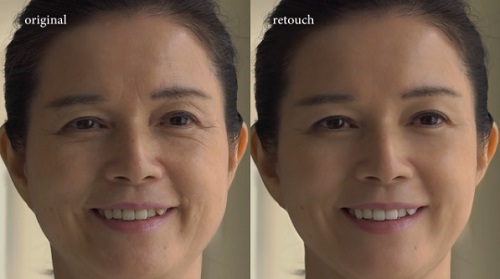
       Film industry is developing day by day, perhaps it is developing  in such a way that it percentage development is more then that of economy of India. People are ready to invest lot and lot of money in this business. As a result the technology used in film industry are so advanced that they can convert the cat into tiger and human into the ape .This type of technology were used in movies like life of pi.


       Out of all this technology the most advanced technology is age reduction technology .It is a technology invented by the company called Foton. What is does is that it reduces the age of the person .So now it is possible that 40 year old person can act as 20 year old person. So now on words no 6 hour makeup only technology .This is just the beginning .